
Summary:
Understanding Lyme Disease Risk in Northern New Jersey
New Jersey averages 69.1 Lyme disease cases per 100,000 population, making it what health officials call a “high-incidence state.” But the risk isn’t spread evenly across the Garden State.
Morris and Sussex counties report the largest numbers of Lyme disease cases, along with Hunterdon and Warren counties. If you’re reading this from Franklin, Newton, or anywhere in the northern counties, you’re in the heart of tick country.
The primary vector is the blacklegged or deer tick (Ixodes scapularis), which becomes infected when feeding on animals like white-footed mice and remains infected for life. What makes this particularly challenging is that many diagnosed cases have no known history of a tick bite because these pests attach in hard-to-see areas.
When Ticks Are Most Dangerous in New Jersey
Timing matters when it comes to tick prevention. Fifty percent of New Jersey’s Lyme disease cases occur in June and July, which coincides with peak outdoor activity for families.
Nymphal blacklegged ticks are active and at peak abundance from May to July. Here’s what makes them particularly dangerous: these tiny nymphs are about the size of a poppy seed, making them especially hard to detect.
You’re most likely to encounter them in moist, dark, vegetated, and leaf-covered locations, such as wooded areas or backyards that border forests. This means your property’s transition zones – where your manicured lawn meets natural areas – become high-risk zones.
The transmission timeline is critical to understand. In most cases, the tick must be attached for 36 to 48 hours or more before Lyme disease bacteria can be transmitted. This gives you a window of opportunity, but only if you know to look for them.
More than 30,000 people are diagnosed with Lyme disease in the U.S. every year, and once a tick bites you, you have approximately 24 hours to control the spread of the disease. After that window, doctors may not be able to prevent the disease from developing.
Why Traditional DIY Methods Fall Short
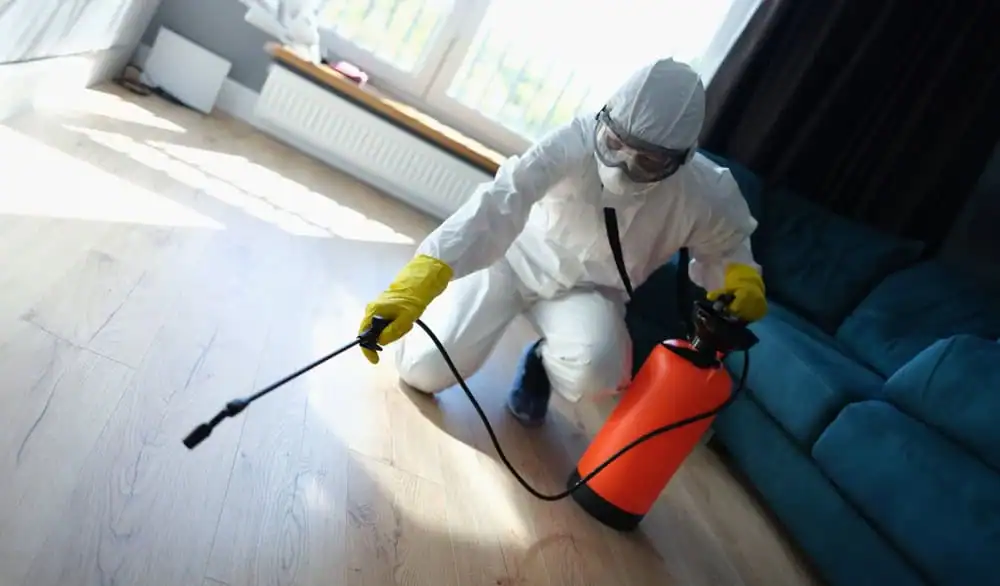
Many homeowners try to handle tick problems themselves, but the reality is more complex than most people realize. Since ticks naturally occur in certain areas, there’s not much you can do to get rid of them on your own – they can only be controlled with targeted applications of pesticides.
The challenge goes beyond just spraying your yard. Mice, squirrels, voles, groundhogs, and chipmunks can harbor ticks – up to a hundred tiny ticks on one mouse alone. These seemingly harmless creatures are hosts spreading ticks throughout your yard.
Over-the-counter treatments often miss the mark because they don’t address the full scope of the problem. Understanding tick life cycles and behavior is crucial – ticks thrive in tall grass and wooded areas where they wait to attach to passing animals or humans, while also breeding in specific environmental conditions.
Professional services understand that effective tick control isn’t just about killing adult ticks you can see. It’s about disrupting breeding cycles, treating the specific microenvironments where ticks develop, and creating barriers that prevent new populations from establishing.
The environmental factors matter too. Climatic extremes with warmer winters have increased tick-borne illness rates significantly, with the CDC now reporting 16 different tick-borne pathogens affecting humans. This means the problem is getting worse, not better, making professional intervention more important than ever.
Protecting Your Pets from Tick-Borne Diseases
Your pets face the same Lyme disease risks you do, but they’re often more exposed because they spend more time in tick habitats. Dogs and cats that go outside come in contact with ticks, can get diseases from them, and can bring ticks into your home, resulting in tick bites and diseases for people living there.
Almost all U.S. Lyme disease cases occur in New Jersey and 14 other states, with ticks ranking second only to mosquitoes for transmitting contagious and toxic diseases. The good news is that despite its prevalence, Lyme disease only causes symptoms in 5-10% of all dogs diagnosed with the infection.
Still, prevention is essential. What makes ticks particularly dangerous are the diseases they can spread to pets and sometimes people, including conditions beyond Lyme disease that can affect your pet’s health.
Essential Pet Protection Strategies
The most helpful things you can do include giving your dog or cat their monthly flea and tick preventative year-round, and checking them over for ticks before bringing them inside. This means examining their coat, inside their ears, between their paw pads, and under their tail.
There are three basic protection options: tick collars that must be close enough to the skin to repel ticks, topical medications that are effective but won’t stop initial tick attachment, and preventive medications that should be used under veterinary care.
If your dog’s lifestyle includes significant outdoor recreation, the Lyme disease vaccine may be appropriate – it doesn’t eliminate risk entirely, but can reduce symptom severity and works well with other preventive measures.
Daily tick checks become crucial during peak season. As a way to reduce the time a tick needs to transmit Lyme bacteria, check for ticks every day, even on days without long outdoor activities. Focus on feet, legs, abdomen, chest, armpits, groin, ears, and neck.
When you find a tick, proper removal matters. Removing a tick isn’t as simple as brushing it off – ticks embed their mouth parts under the skin, and these can be left behind if you pull too quickly. Use clean tweezers, grasp as close to the skin as possible, and slowly pull upward.
Creating a Tick-Safe Yard Environment
Your property’s landscape plays a major role in tick populations. Knowing that ticks live in or near wooded or grassy areas, you can reduce contact by walking in the center of trails and keeping yards clean by mowing lawns, clearing brush, and removing leaf litter.
Clear your yard of tick-friendly habitats such as piles of leaves, brush, and tall grass. These areas provide the moist, shaded conditions ticks need to survive and reproduce.
Professional yard treatments target these specific areas. Effective methodology prevents ticks from entering your yard by providing targeted applications in areas where ticks live and breed – treating un-manicured areas like mulch, groundcover, leaf litter, and overgrown areas, plus treating the perimeter and 5 feet into turf.
You can make your landscape less attractive to tick-bearing animals like deer and mice by eliminating plants they find appealing and using native plants they avoid, such as ornamental grasses and scented plants like lavender and anise hyssop at your property’s perimeter.
Maintenance timing matters too. Professional treatment should ideally begin in April but can be effective as long as it starts before fall, typically including four treatments with the first two in consecutive months, then every other month.
The environmental approach works because targeted treatment is not only more effective but also more environmentally conscious since it uses less pesticide than blanket applications. This means you get better results with less environmental impact.
When to Call Professional Tick Control Services
Ticks are the primary carrier of Lyme disease, with many Lyme-infected ticks found in residential areas, creating a growing public health concern that can impact families when least expected. Professional intervention becomes essential when DIY methods aren’t sufficient for the level of protection your family needs.
The sense of urgency in wanting to eliminate tick threats and prevent infestations on your property is completely understandable. We understand both the science behind effective tick control and the local conditions that make Northern New Jersey particularly challenging.
The advantage of working with local experts is our understanding of regional tick populations, seasonal patterns, and the specific environmental factors that affect Sussex and Morris County properties. We can provide the targeted, comprehensive approach that gives families the confidence to enjoy their outdoor spaces safely.