Summary:
You found something. Maybe it was a pile of what looks like fine sawdust near a window frame. Maybe it was a large black ant — bigger than any ant you’ve seen inside before — crawling across your kitchen counter. Or maybe you spotted winged insects swarming near a door and your stomach dropped.
Whatever triggered the search, you’re right to take it seriously. Carpenter ants and termites are two very different problems, but they share one thing in common: the longer you wait, the worse it gets. This page will help you figure out what you’re actually dealing with — and what comes next.
How to Identify Carpenter Ants in Your Home
Carpenter ants are the largest ants you’ll commonly find inside a Morris County home — typically half an inch to five-eighths of an inch long, with queens reaching three-quarters of an inch. They’re usually black, though some have reddish or yellowish coloring on their midsection. Their most distinctive physical feature is a pinched, narrow waist — almost like an hourglass — which separates them clearly from termites when you know what to look for.
Unlike most ants that nest in soil and wander indoors looking for food, carpenter ants nest inside wood. They don’t eat it — that’s a common misconception — but they carve smooth, clean tunnels called galleries through it to build their colonies. The wood they prefer is typically soft, moist, or beginning to decay, which is why you’ll often find them near leaky windows, aging decks, and water-damaged sill plates.
What Does Carpenter Ant Frass Look Like?
One of the most reliable signs of a carpenter ant infestation isn’t the ants themselves — it’s what they leave behind. As they excavate wood to build their galleries, they push the debris out through small openings. That debris is called frass, and it looks like very fine sawdust or pencil shavings. Unlike actual sawdust from construction work, carpenter ant frass often contains tiny insect body parts — legs, antennae fragments — mixed in with the wood shavings. It’s a small detail, but it’s one of the clearest confirmation signs you can find without tearing open a wall.
You’ll typically find frass beneath window frames, along baseboards, near door frames, or at the base of wooden structural elements like posts or beams. If you find a small pile of this material and it’s mixed with what looks like insect debris, don’t dismiss it. That’s not dust from your HVAC system. That’s evidence of an active colony working inside your wood.
It’s also worth knowing that carpenter ants are most active at night. If you’re hearing faint rustling or crackling sounds inside your walls after dark, that’s another sign worth paying attention to. And if you’re seeing large black ants inside your home during winter — when they’d normally be dormant outdoors — that’s one of the strongest indicators that a colony is already established inside the structure itself, not just passing through from outside.
Carpenter ants in Morris County become active outdoors from roughly May through October, with peak foraging activity in July. But an interior colony doesn’t follow that schedule. It stays active year-round because your heated home provides everything it needs. Seeing them in January or February isn’t a fluke — it’s a red flag.
Carpenter Ants vs Termites: How to Tell Them Apart
This is the question most homeowners are actually asking when they land on a page like this — and it’s a fair one, because the two pests can look similar at a glance, especially when winged. Getting this wrong matters, because the treatment for carpenter ants and the treatment for termites are completely different. Treating for the wrong pest is wasted time and wasted money.
Here’s the clearest way to separate them. Carpenter ants have a noticeably pinched waist — narrow between the thorax and abdomen. Termites have a broad, uniform waist with no pinch at all; their body looks more like a straight tube. Carpenter ants have elbowed antennae that bend at a sharp angle. Termite antennae are straight and bead-like, with no bend. When winged, carpenter ants have two pairs of wings where the front wings are noticeably larger than the back wings. Termite swarmers have four wings of equal size that are often longer than their body and shed easily — you may find discarded termite wings near windowsills or entry points even if you never see the insects themselves.
The damage patterns are different too. Carpenter ant galleries are smooth and clean — almost polished on the inside, as if sanded. Termite damage looks rougher and muddier; subterranean termites build mud tubes and pack their galleries with soil. If you’re looking at damage and it’s clean, smooth, and hollow, that points more toward carpenter ants. If there’s mud or a gritty, layered texture, that points toward termites.
Frass tells the story as well. Carpenter ant frass is light and fine, mixed with insect parts. Drywood termite frass looks like tiny uniform pellets — almost like fine coffee grounds. Subterranean termites don’t typically produce visible frass at all; their waste stays packed inside the galleries.
Neither pest is something to sit on. But knowing which one you have determines exactly what needs to happen next.
Why Morris County Homes Are Particularly Vulnerable to Carpenter Ants
Morris County isn’t just any suburban market. It’s heavily wooded, full of older homes, and sits in a climate zone where warm, humid summers accelerate the wood decay that carpenter ants depend on. That combination creates persistent, year-round pressure that homeowners in this area deal with in ways that someone in a newer development on flat, treeless land simply doesn’t.
The risk is real and it’s local. A Rutgers University study found that 75% of urban shade trees sampled in New Jersey were infested with carpenter ants — and those trees sit in your yard, next to your house, connected to your deck, pressed against your siding. The ants in those trees don’t stay there.
Which Morris County Neighborhoods Face the Highest Carpenter Ant Risk?
If you’re in Denville, Boonton, Wharton, Rockaway, or the older sections of Morristown and Dover, you’re in an area where carpenter ant pressure is especially common. These communities have a mix of older housing stock — some of it pre-1960 — with original wood framing, mature trees planted close to foundations, and in many cases, stone foundations that allow moisture to migrate into the structure. That’s a combination carpenter ants find ideal.
Properties near Boonton Reservoir, Splitrock Reservoir, or any of the streams and wetland corridors running through Morris County face an additional layer of risk. Higher ambient moisture means faster wood deterioration, and faster wood deterioration means more nesting opportunities. You don’t have to have a leaky pipe inside your house for moisture to be a problem — it can come from the landscape itself.
Even in newer communities in Parsippany, Randolph, and Rockaway Township — where HOA-managed townhome developments are common — carpenter ants are a recurring issue. Shared walls, landscaped common areas with mulch and wood borders, and aging exterior wood elements create the same conditions that attract ants to single-family homes. The problem just spreads differently when structures are connected.
Mahlon Dickerson Reservation, which straddles Morris and Sussex counties, is one of the largest forested areas in northern New Jersey. Properties anywhere near that corridor — and there are many throughout Morris County — sit adjacent to a massive reservoir of carpenter ant colonies that expand into residential structures every spring. Carpenter ants can travel more than 100 yards from their primary colony to establish satellite nests in nearby structures. That’s not a distant threat. For a lot of Morris County homeowners, that colony is already in your yard.
Why DIY Sprays Don't Solve a Carpenter Ant Problem
If you’ve already tried spraying and the ants came back, that’s not a product failure — it’s a structural one. Consumer-grade sprays are designed to kill what you can see. They’re not designed to reach a colony that’s living inside your wall cavity, and they’re definitely not equipped to handle the way carpenter ant infestations are actually structured.
Here’s the part most homeowners don’t know: carpenter ants typically operate with two types of colonies — a primary colony, which is usually outdoors in a tree or stump, and one or more satellite colonies, which are the nests they establish inside structures. The ants you’re seeing in your kitchen are foragers traveling between those colonies. Spraying them does nothing to the source. Within days, new foragers replace them, and the infestation continues exactly as before.
Consumer sprays can actually make things worse. When ants encounter a treated surface, they often retreat deeper into wall voids, making the colony harder to locate and treat. What looked like a manageable problem near your window frame can migrate behind insulation, into floor joists, or further into structural framing — and you won’t know until the damage is already done.
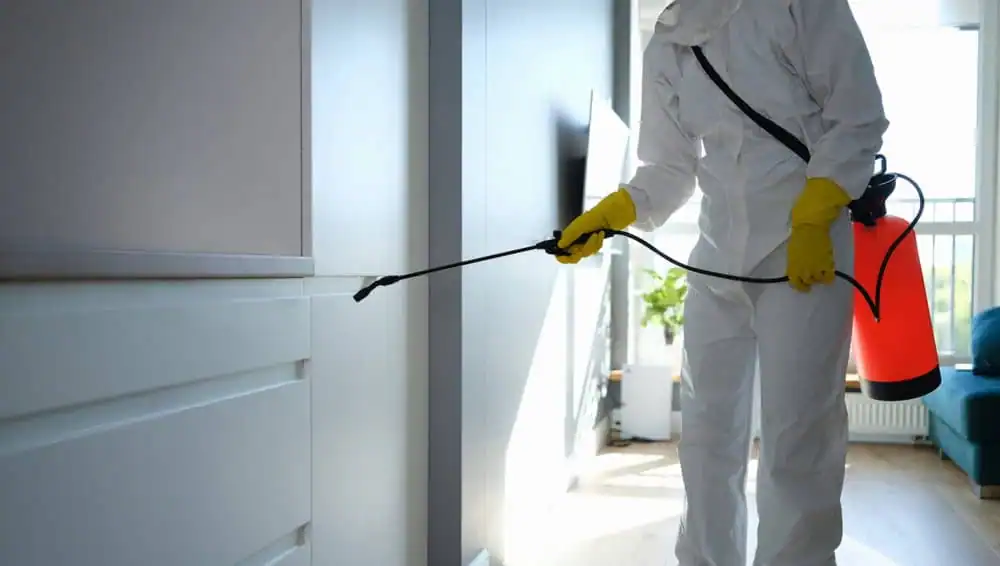
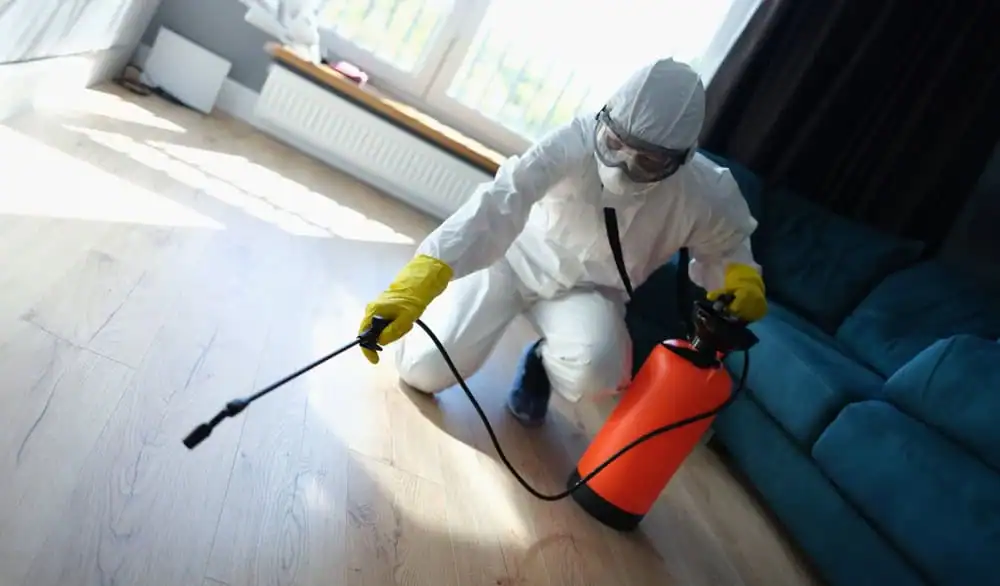
Professional treatment works differently. A licensed technician inspects the structure to locate both the satellite colony inside the home and, where possible, the primary colony outside. Treatment targets the nests directly, using professional-grade products that aren’t available at hardware stores and application methods — including void treatments and targeted baiting — that reach where the colony actually lives. Follow-up matters too, because a single visit that doesn’t address the moisture source that attracted the ants in the first place leaves the door open for reinfestation.
This is where our approach at Prestige Pest Unit & House Wash is genuinely different from a standard pest control visit. We handle the infestation. But we also offer the exterior cleaning services — gutter cleaning, house washing, deck cleaning — that address the moisture buildup and decaying organic material that drew the ants to your property in the first place. Treating one without the other is like fixing a leak without drying out the wall. You’ve addressed the symptom, but not the cause.
When to Call a Carpenter Ant Exterminator in Morris County, NJ
If you’re seeing large black ants indoors — especially in winter, especially near wood, especially more than once — it’s time to call. If you’ve found frass near a window frame or door. If you spotted swarmers in spring and brushed it off. Any of those things, on their own, is enough reason to have someone take a look before the damage gets ahead of you.
The good news is that carpenter ant infestations caught early are very treatable. The damage is rarely catastrophic at the start, and a thorough professional treatment — one that locates the colony, treats the source, and addresses the conditions that attracted the ants — resolves the problem in a way that DIY simply can’t match.
We serve Morris County, NJ from our base in Franklin — just across the Sussex County line — which means same-day appointments are genuinely available when you call before noon. If you’re not sure what you’re dealing with, that’s fine too. Reach out to Prestige Pest Unit & House Wash and we’ll help you figure it out.