
Summary:
You didn’t do anything wrong. Bed bugs don’t care how clean your home is — they hitch rides on luggage, used furniture, clothing, even the seats on the NJ Transit Morris & Essex Line. One trip into the city, one night in a hotel, and suddenly you’re dealing with something that doesn’t go away on its own.
If you’ve already tried the store-bought spray and it hasn’t worked, you’re not alone. Most people in that situation end up here — researching what professional bed bug treatment actually looks like and trying to figure out whether heat or chemicals is the smarter move.
We give you a straight answer.
Professional Bed Bug Treatment Methods Compared
There are two primary professional approaches to bed bug treatment: thermal remediation (heat treatment) and chemical application. Many professionals now recommend a combination of both, which falls under what the industry calls integrated pest management, or IPM. Each method has real strengths — and real limitations — depending on the severity of the infestation, the layout of your home, and what outcome you’re working toward.
Understanding how each one works isn’t just useful trivia. It’s how you avoid paying for the wrong treatment twice.
How Bed Bug Heat Treatment Works — And Why Eggs Are the Key
Heat treatment works by raising the temperature inside your home to a level that bed bugs simply cannot survive. Research from the University of Minnesota’s Department of Entomology found that bed bugs die after 90 minutes of exposure at 113°F, within 20 minutes at 118°F, and almost instantly at 122°F. Professional equipment reaches and holds these temperatures throughout the entire space — including inside mattresses, inside walls, and deep inside furniture — which is something a hair dryer or a hot car cannot replicate.
Here’s why this matters more than most people realize: eggs. Bed bug eggs are notoriously resistant to chemical treatments. They don’t hatch right away, which means a chemical application that kills every adult and nymph in your home today can still leave behind a new generation that hatches two weeks later. Heat is the only method proven to kill bed bug eggs in a single treatment cycle. That’s not a sales pitch — it’s the reason heat treatment is widely considered the most thorough single-visit option available.
The tradeoff is preparation. Before a heat treatment, you’ll need to remove candles, aerosol cans, certain medications, and heat-sensitive items like vinyl records or specific electronics. We’ll give you a full prep list in advance. You’ll also need to be out of the home for the duration — typically six to eight hours. For most homeowners in Morris County, that means planning for a full day away, which is a real inconvenience but a manageable one when you consider what you’re getting in return.
Heat treatment is generally the right call for moderate to severe infestations, for homes with a lot of soft furnishings and hard-to-reach spaces, and for anyone who wants the highest possible confidence that the problem is resolved in one visit. It’s also the preferred option for families with young children or pets, since there are no chemical residues left behind after treatment.
How Chemical Bed Bug Treatment Works — And When It's the Right Fit
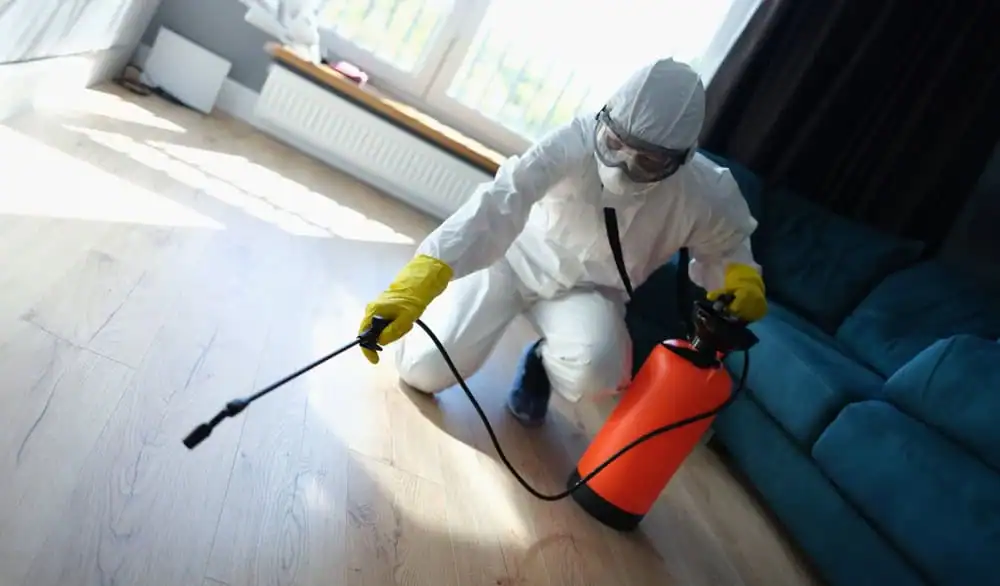
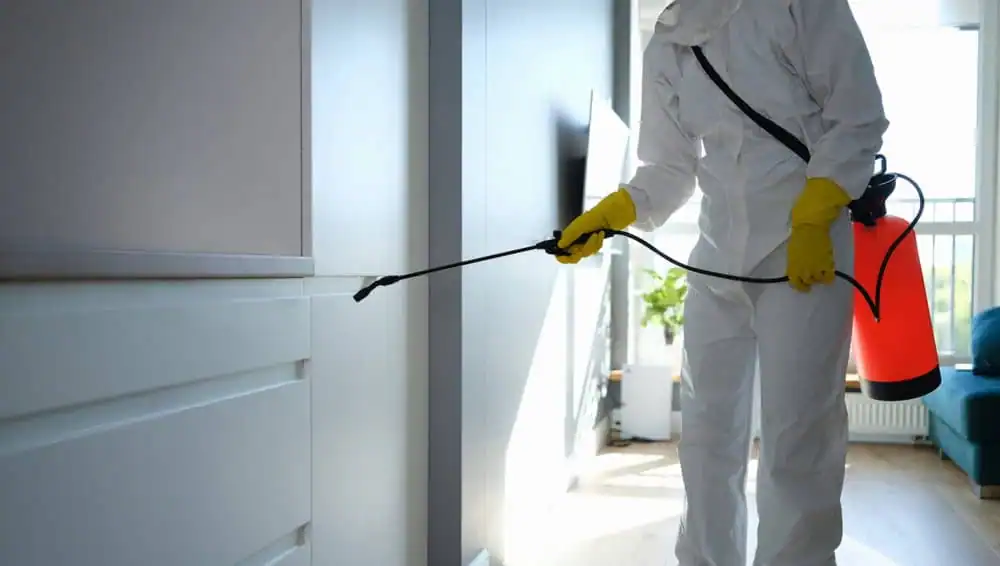
Chemical treatment uses EPA-registered pesticide formulations applied directly to infested areas — mattress seams, bed frames, baseboards, electrical outlets, furniture joints, and the cracks and crevices where bed bugs spend most of their time. These aren’t the same products you’ll find at a hardware store. Professional-grade formulations are more concentrated, more targeted, and applied with equipment and technique that dramatically changes how effective they are.
The main limitation is the egg problem mentioned above. Because eggs aren’t killed on contact, chemical treatment almost always requires multiple visits — typically spaced two to three weeks apart to catch newly hatched nymphs before they can reproduce. That’s not a flaw in the process; it’s just how the biology works. A good technician will tell you this upfront and schedule follow-ups accordingly.
One genuine advantage of chemical treatment is residual protection. Unlike heat, which eliminates everything present on treatment day and then leaves no ongoing barrier, certain chemical formulations continue working for weeks after application. This makes chemical treatment particularly useful as a follow-up layer after heat treatment — which is exactly why the integrated approach has become the professional standard. The CDC and EPA jointly recommend combining methods rather than relying on a single approach, and that recommendation exists because the combination consistently produces better long-term outcomes.
Chemical treatment tends to be the more practical choice for mild or early-stage infestations, for targeted spot treatments in specific rooms, or as a residual protective measure after a heat treatment has already cleared the bulk of the infestation. It’s also worth knowing that bed bugs in some regions have developed resistance to certain pesticide classes — another reason why professional assessment matters. A licensed technician will know which formulations are effective and which ones are likely to fall short.
Bed Bug Heat Treatment vs. Chemical: Which One Do Morris County Homeowners Actually Need?
The honest answer is that it depends on what you’re dealing with. The severity of the infestation, the type of home, and how long the problem has been present all factor into the right recommendation. That’s why a professional inspection should always come before a treatment decision — not after.
What we can say is that for most Morris County homes, especially older properties in Morristown and Madison with historic construction and more hiding spots, heat treatment offers the most comprehensive single-visit solution. For newer HOA townhome communities in Parsippany or Montville — where shared walls create the risk of bed bugs moving between units — a combination approach with residual chemical protection is often the smarter long-term strategy.
Why Morris County's Proximity to New York City Changes Your Risk Level
New York City ranks among the worst cities in the country for bed bug infestations, according to Orkin’s annual treatment data. Philadelphia isn’t far behind. Morris County sits geographically between both metros, and a significant portion of residents commute into Manhattan daily on NJ Transit’s Morris & Essex Lines — sitting in seats, riding trains, and staying in hotels where exposure is a real and ongoing risk.
This isn’t meant to alarm you. It’s just context that explains why bed bug calls in Morris County aren’t random bad luck. The corporate campuses in Parsippany and Florham Park bring in business travelers from across the country. Drew University in Madison and Fairleigh Dickinson in Florham Park bring in students moving in and out of off-campus housing every semester. The hotels along Route 10 and Route 46 serve a steady stream of guests. All of it creates a consistent introduction pathway that makes Morris County a higher-exposure market than most people expect.
Understanding this also changes how you think about prevention. Inspecting secondhand furniture before bringing it inside, checking luggage after hotel stays, and knowing the early signs of an infestation — small reddish-brown stains on sheets, tiny dark spots along mattress seams — can mean catching a problem when it’s small rather than after it’s spread to multiple rooms. Early detection is the single biggest factor in keeping treatment costs and disruption to a minimum.
What Morris County Homeowners Ask Most About Bed Bug Treatment
One of the most common questions we hear is whether the treatment will actually work — and whether the bugs will come back. It’s a fair concern, especially from homeowners who’ve already spent money on store-bought products that didn’t hold. Professional treatment, done correctly and with the right method for your situation, has a dramatically higher success rate than anything available over the counter. We talk through how the infestation likely started and what steps to take after treatment to prevent reintroduction.
Another question that comes up often, particularly from residents in multi-unit buildings and HOA communities in Parsippany and Montville, is what happens if a neighbor’s unit is also infested. Shared walls are a real complication in Morris County townhome communities. Bed bugs can move through wall voids, electrical chases, and plumbing penetrations between units. In those situations, coordinating treatment across multiple units — even if only one is visibly affected — is often necessary for a lasting result. Property managers dealing with this should factor that into the plan from the start.
People also ask about safety, especially for children and pets. Heat treatment leaves no chemical residue, which makes it the preferred option for families with young kids or animals. Chemical treatments use EPA-registered formulations that are applied in targeted areas — not broadcast throughout the entire home — and we give you specific guidance on when it’s safe to re-enter treated spaces. In New Jersey, every commercial pesticide applicator is required to hold an NJDEP license, which means any company you hire should be able to provide that credential on request. If they can’t, that’s a red flag worth taking seriously.
Getting Bed Bug Treatment Right the First Time in Morris County, NJ
Bed bugs don’t resolve on their own, and the longer an infestation goes untreated, the harder it becomes to eliminate. The good news is that with the right method — or the right combination of methods — this is a problem that can be fully resolved. You don’t have to keep sleeping on the couch or bagging up everything you own.
The most important step is getting a proper inspection before committing to a treatment plan. What works for a single bedroom in a newer Parsippany townhome may not be the right approach for a three-story Victorian in Morristown. Method matters, and so does the experience of the person applying it.
If you’re ready to stop guessing and get a clear answer about what’s going on in your home, we serve Morris County with same-day appointments available when you call before noon — backed by a 5.0-star rating across 236+ verified reviews and a 100% satisfaction guarantee. If the problem isn’t resolved, we come back at no additional cost. Reach out today and get help within hours, not days.