Summary:
How to Check for Bed Bugs: Early Detection Signs
Finding bed bug infestations early makes treatment far less costly and easier than dealing with widespread problems, though low-level infestations are challenging to identify correctly. Start your inspection in the bedroom since that’s where bed bugs typically establish their first foothold.
Look for rusty or reddish stains and pinpoint dark spots on bed sheets or mattresses, plus clusters of dark brown or black spots from dried excrement. After feeding, bed bugs may leave small blood stains on bedding, mattresses, or pajamas that appear as small reddish-brown spots or smears.
Don’t rely solely on bite marks for confirmation. Bites on the skin are a poor indicator of bed bug infestation since bed bug bites can look like bites from other insects, rashes, or even hives.
Where Bed Bugs Hide During Daylight Hours
Since bed bugs are only about the width of a credit card, they can squeeze into really small hiding spots – if a crack will hold a credit card, it could hide a bed bug. Understanding their preferred hiding locations helps you conduct thorough inspections.
Around the bed, they can be found near the piping, seams and tags of the mattress and box spring, and in cracks on the bed frame and headboard. Over time, the tiny bugs may move farther out into any crevice or location that offers a hiding place.
Check these common areas systematically. During the day, bed bugs hide in areas in and around your bed including along the seams of your mattress, in your box spring, bed frame and headboard, and between and along the seams of cushions of bedroom chairs or couches. Bed bugs prefer dark, tight spaces where they can remain undisturbed during the day, hiding in cracks and crevices in furniture, baseboards, wallpaper, electrical outlets, and other nearby structures.
Don’t forget to examine picture frames, alarm clocks, and other items near sleeping areas. Bed bugs hide in tight spaces near where people sleep, including mattress seams, furniture joints, and baseboards, emerging at night in search of a blood meal. Use a flashlight and magnifying glass to spot the telltale signs in these hiding spots.
Look for shed skins and eggshells too. As bed bugs molt and progress through their life cycle, they shed their exoskeletons, leaving behind empty eggshells and translucent shed skins along the seams of your mattress or in the corners of your furniture, while eggs appear as white ovals that signify bugs are present.
Physical Identification: What Bed Bugs Actually Look Like
Bed bugs are an oval shape and only grow to about 3/16th of an inch in length, appearing brown and flat prior to feeding, then becoming more red in color, swollen, and elongated after feeding. These small, reddish-brown insects belong to the family Cimicidae, have a flattened oval shape and are typically about the size of an apple seed when fully grown, around 4 to 5 millimeters in length.
Adult bed bugs have six legs and two antennae. Despite having reduced “wing pads,” bed bugs do not have wings and cannot fly. Adults are rusty red, and apple seed sized, 3/8″, with six legs, oval, and flattened from top to bottom – they do not jump or fly, but are good runners and hitch hikers.
Young bed bugs look different from adults. Young bed bugs can appear white or clear, while adult bed bugs are a reddish-brown color. Eggs are tiny, white and glued to surfaces, while nymphs are light colored, and 1/16th”.
Knowing what to look for is the first step in identifying and controlling bed bugs, as there are many bugs that look like bed bugs, so accurate identification is critical to avoid costly treatment for the wrong bug. When in doubt, capture a specimen and have it professionally identified before proceeding with treatment.
Bed Bug Treatment Options: Heat Treatment vs Chemical
You have two primary treatment approaches for bed bug control: heat treatment and chemical treatment. Each method has distinct advantages and limitations that affect cost, timeline, and effectiveness. Understanding these differences helps you make the right choice for your specific situation.
Both methods have their pros and cons, but when it comes to effectiveness, safety, and environmental impact, heat treatment stands out as the superior choice. However, your decision should factor in budget, timeline, and the severity of your infestation.
Heat Treatment: Fast but Expensive
Heat treatment for bed bugs is a safe, non-chemical approach to exterminating them in all life stages by using powerful heaters and fans to heat a home evenly to temperatures above 140°F, killing any bed bugs present. Heat treatments work by raising the temperature in the affected area to a level lethal to bed bugs at all life stages, including eggs, killing the bed bugs within hours as heat penetrates cracks and crevices where chemicals may not reach.
The biggest advantage is speed and thoroughness. Properly executed heat treatment usually requires only one session, unlike chemical treatments that often need multiple visits, often requiring just one session to completely eliminate bed bugs. The heat treatment draws these nasty bed bugs out and kills them at all stages of life, whether they’re just eggs or full-grown adults, with heat destroying eggs and breaking the reproductive cycle, no matter where they are.
Heat treatment requires preparation and comes with higher upfront costs. This process may require gathering up all items the heat may damage such as wax-based products, aerosol cans, medications, house plants, vinyl records, and more, as some heat-sensitive items, like candles or vinyl records, may have to be removed to ensure they are not harmed. This option can be more expensive upfront than chemical treatments, with costs associated with the professional service requirement, careful monitoring of temperature, and how long it takes to conduct the treatment.
The main drawback is lack of residual protection. Heat treatment does not prevent future infestations as without residual chemicals to provide a barrier, bed bugs may return. While heat treatment kills all the bed bugs in your home, it doesn’t prevent new ones from coming in, leaving no residuals, which is great for your health and the environment but is also good for bed bugs looking to take up residence in your home.
Chemical Treatment: Lower Cost, Longer Timeline
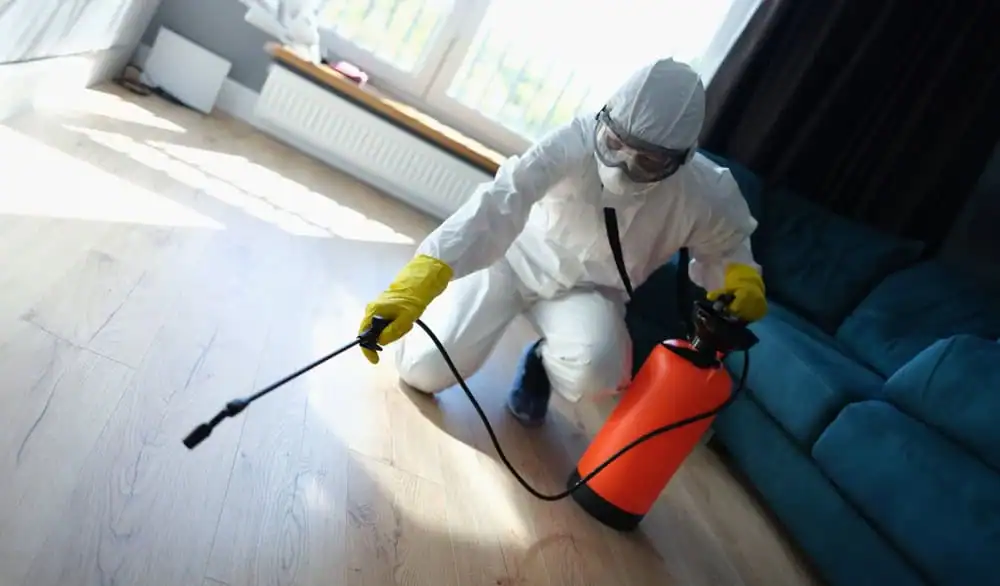
Chemical treatments for bed bugs typically involve performing three individual treatments two weeks apart, so about six weeks total. Chemical treatment involves applying insecticides to areas where bed bugs are hiding, with pest control experts typically using a combination of contact insecticides for immediate results, residual chemicals to kill bed bugs over time, and dust formulations for cracks and crevices.
The primary advantages are cost and residual protection. Generally, chemical treatments are more cost-effective than heat treatments, so you can save a bit of money and are generally less expensive upfront than heat treatment. When applied correctly, some chemicals can linger on treated surfaces, providing protection for several weeks potentially killing bed bugs that come into contact with these areas over time, with some treatments leaving a chemical barrier that can prevent future infestations for a time.
However, chemical treatments face significant challenges. As bed bugs have become increasingly chemical resistant, modern chemical treatments involve rotating different products to ensure some of the chemicals being used will kill bed bugs, as bed bugs have developed resistance to many common insecticides over time, making chemical treatments less effective.
Chemical treatments can only treat the areas they touch – that means if bed bugs are taking shelter somewhere the chemicals aren’t, they are likely to survive and require multiple treatments, as chemicals must make direct contact with bed bugs, meaning hidden pests or eggs can be missed. Recurring infestations are possible and sometimes likely because chemicals don’t kill the eggs.
Preventing Re-Infestation: Long-Term Bed Bug Control
Successful bed bug control doesn’t end with treatment. It can be difficult to eliminate bed bugs, but it’s not impossible – don’t throw out all of your things because most of them can be treated and saved. Prevention strategies protect your investment in professional treatment and maintain your peace of mind.
A cluttered home provides more places for bed bugs to hide and makes locating and treating them harder, so reduce clutter in your home to reduce hiding places for bed bugs. Use a protective cover that encases mattresses and box springs to eliminate many hiding spots, with the light color of the encasement making bed bugs easier to see – be sure to purchase a high quality encasement that will resist tearing and check regularly for holes.
Regular monitoring is essential for long-term success. Keep checking for at least a year after you’re done to make sure all the bed bugs are gone, and if no live bugs or their signs are noticed for 6 weeks, you may declare “the bed bugs are eliminated!” When you need professional bed bug control that combines expertise with responsive service, we at Prestige Pest Unit & House Wash provide comprehensive solutions for Sussex County, NJ and Morris County, NJ homeowners who demand quality results the first time.