
Summary:
Most people call a pest control company after they’ve already got a problem. A mouse in the kitchen. Termite damage near the basement door. Wasps building a nest right beside the front steps. That’s understandable — but it’s also exactly the pattern that keeps pest problems cycling back year after year.
There’s a better approach, and it’s been gaining traction with homeowners across Morris County who are tired of paying for the same fix twice. It’s called integrated pest management, and the difference between it and traditional pest control is bigger than most people realize. Here’s what you need to know.
Understanding Integrated Pest Management Principles
Integrated pest management — IPM for short — is a method that starts with prevention instead of chemicals. Rather than showing up on a schedule and spraying regardless of what’s actually happening at your property, IPM uses inspection, identification, and targeted action to address pests at their source.
The EPA describes it as an environmentally sensitive approach that uses current information on pest life cycles and their interaction with the environment to manage problems with the least possible hazard to people, property, and the environment. That’s not marketing language — it’s a formal framework that’s been in use since 1959 and is now practiced in over 100 countries.
For homeowners, what that means in practice is this: less unnecessary chemical exposure, fewer repeat treatments, and a plan that actually addresses why pests are showing up in the first place.
Comprehensive Pest Control Starts With Knowing What You're Actually Dealing With
Traditional pest control often skips the diagnostic step. A technician arrives, applies a treatment to the areas where pests have been spotted, and leaves. If the product works, great. If not, you call back and repeat the process. There’s rarely a conversation about what’s drawing pests to that spot, how they’re getting in, or what conditions are making your home more attractive than your neighbor’s.
IPM flips that sequence entirely. Before any treatment is recommended, a thorough inspection identifies the specific pest, its likely entry points, and the environmental conditions that are supporting it. That might mean moisture buildup near a crawl space, gaps around plumbing penetrations, organic debris piled against the foundation, or overgrown vegetation creating a bridge to your siding. These aren’t minor details — they’re the actual reason pests keep coming back.
In Morris County, this matters more than people often realize. The region’s wooded character — think the trails around Morristown National Historical Park, the green corridors running through Denville and Rockaway Township, the older housing stock in Boonton and Dover — creates consistent pest pressure from multiple directions. Subterranean termites are active throughout northern New Jersey year-round, even when you can’t see them. Deer ticks, which carry Lyme disease, are a genuine public health concern in communities that border park land. Mice and rats push hard into homes every fall as temperatures drop, and they don’t need much of a gap to get inside.
A comprehensive pest control approach accounts for all of that. It doesn’t treat your home like a generic structure — it treats it like the specific building it is, in the specific environment it sits in, with the specific vulnerabilities that come with that location.
Pest Control Packages That Include Exterior Cleaning Prevent More Than They Treat
Here’s something most pest control companies won’t tell you, mostly because they don’t offer exterior cleaning: the condition of your home’s exterior has a direct impact on your pest situation.
Algae and mold growth on siding creates moisture-rich surfaces that insects use for harborage. Clogged gutters hold standing water — a breeding ground for mosquitoes and an attractant for rodents looking for a water source near shelter. Organic debris sitting against your deck or foundation gives ant colonies and spiders exactly the kind of protected, damp environment they’re looking for. None of that gets addressed by a spray treatment inside the house.
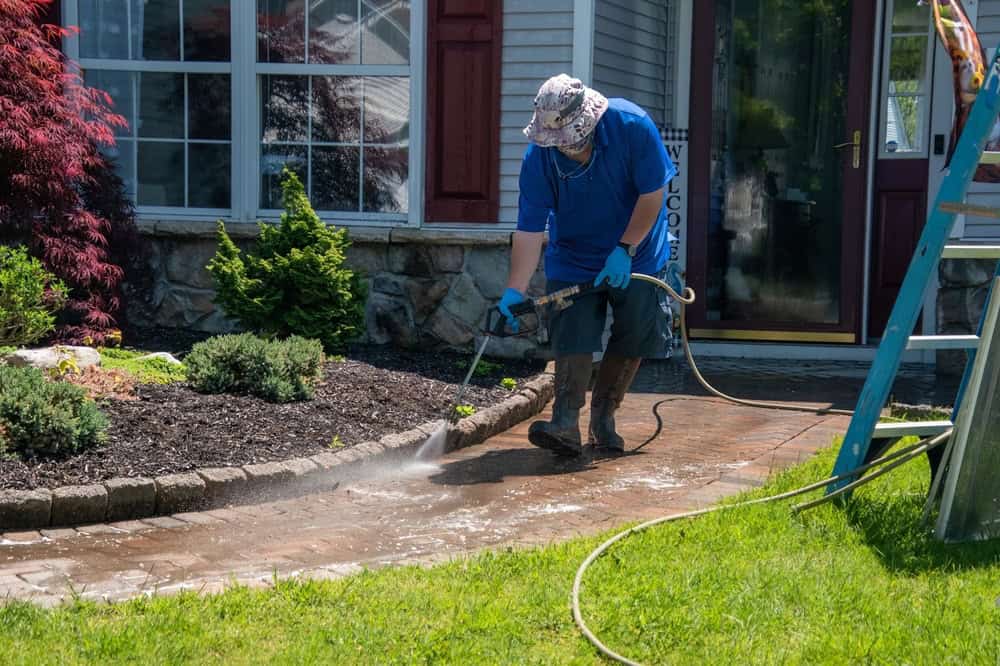
This is the core idea behind pest control packages that combine pest management with exterior cleaning. When you clear out the conditions that invite pests in — through professional house washing, gutter cleaning, and deck cleaning — you’re not just making the property look better. You’re removing harborage areas and reducing the environmental factors that make your home a target in the first place. It’s habitat modification, which is one of the foundational principles of IPM.
For homeowners in places like Parsippany, Chatham, or Florham Park, where properties often sit on wooded lots or near green corridors, this kind of proactive exterior maintenance isn’t optional — it’s part of the strategy. And for HOA communities throughout Morris County, where shared spaces and adjacent units mean one property’s pest problem can quickly become everyone’s, a coordinated approach that covers both pest treatment and exterior upkeep is the only one that actually holds.
We offer both services under one roof — licensed pest control and professional exterior cleaning — because we’ve seen firsthand that treating one without the other leaves the job half done. You shouldn’t need to hire two companies, coordinate two schedules, and pay two invoices for problems that are fundamentally connected.
Pest Management Services That Protect What Morris County Homes Are Actually Worth
The median home value in Morris County is $582,500. Termites alone cause more than $5 billion in property damage across the United States every year. Rodents chew through wiring. Moisture from pest-related damage leads to structural rot. These aren’t worst-case scenarios — they’re documented outcomes of pest problems that weren’t caught or addressed early enough.
Framing pest management services as a maintenance cost misses the point. For most homeowners in this county, a home is the largest financial asset they’ll ever own. Protecting it with a professional, prevention-first approach isn’t a luxury — it’s straightforward property management.
Why Integrated Pest Management Costs Less Over Time Than Traditional Spraying
The upfront comparison between a single spray treatment and a full IPM program often makes traditional pest control look cheaper. But that math only works if the single treatment actually solves the problem — and for most recurring pest issues, it doesn’t.
When a treatment addresses the symptom without touching the root cause, pests return. You call again. Another treatment gets scheduled. The cycle continues, and the cumulative cost of four or five reactive visits over a year adds up quickly. Meanwhile, the underlying entry points, the moisture problem behind the wall, or the debris-filled gutter that’s been feeding the issue the whole time — none of that gets fixed.
IPM changes the economics of pest control by investing more in the diagnostic and preventive phase upfront, which reduces the frequency of reactive treatments over time. Integrated pest management strategies can reduce pesticide use by up to 50% compared to conventional approaches — which means fewer applications, less chemical exposure in your home, and lower long-term costs.
For Morris County homeowners who’ve already tried the repeat-call cycle with a national chain, this distinction tends to land quickly. The frustration of paying for the same problem multiple times is one of the most consistent complaints we hear from new customers in towns like Denville, Chester, and Budd Lake. The answer isn’t a different spray — it’s a different approach.
What to Actually Look for When Choosing a Pest Control Company in Morris County, NJ
Licensing matters more than most people check for. In New Jersey, commercial pest control applicators are regulated by the NJDEP and must pass state exams, complete a minimum of 40 hours of on-the-job training, and demonstrate an understanding of IPM principles before they can legally apply pesticides for pay. That’s not a formality — it’s a meaningful credential that separates trained professionals from anyone who buys a sprayer and calls themselves an exterminator.
Beyond licensing, the things worth paying attention to are: whether the company conducts a real inspection before recommending treatment, whether they explain what they’re using and why, whether they offer a guarantee that means something, and whether they can actually get to you when you need them. A five-day wait when you’ve got a rodent problem isn’t acceptable, and a lot of the larger regional chains can’t do better than that during peak season.
We offer same-day appointments when you call before noon, and we back every service with a 100% satisfaction guarantee — if you’re not happy with the result, we’ll retreat at no additional cost. No fine print, no runaround. We’re also fully licensed and insured, which protects you if anything goes wrong on your property during a service visit.
Our 5.0 rating across 158-plus Google reviews reflects what we hear from customers consistently: they wanted someone who showed up on time, explained what they were doing, and actually solved the problem. That’s the standard we hold ourselves to for every home we service across Morris County — from Morristown and Madison down to Lake Hopatcong and Landing.
The Right Pest Control Approach for Morris County Homeowners
If pests keep coming back, the treatment isn’t the problem — the approach is. Integrated pest management works because it addresses what’s actually driving the issue, not just what’s visible on the surface. Combined with exterior cleaning that removes the conditions pests need to thrive, it’s a fundamentally more complete solution than anything a single spray visit can offer.
Morris County homeowners are protecting significant investments in communities they’ve chosen to put down roots in. That deserves more than a reactive, one-size-fits-all service.
If you’re ready to stop treating the same problem twice, reach out to us. We serve homeowners and property managers throughout Morris County and would be glad to walk you through what a real integrated approach looks like for your specific property.
—
**Frequently Asked Questions**
**What is integrated pest management?** Integrated pest management is a prevention-first approach to pest control that uses inspection, monitoring, and targeted treatments to address pests at their source — rather than applying pesticides on a fixed schedule regardless of what’s actually happening at your property. It’s an EPA-recognized framework designed to produce better long-term results with less unnecessary chemical exposure.
**Is it better to hire one company for pest control and exterior cleaning?** For most homeowners, yes — and not just for convenience. Pest problems and exterior conditions are directly connected. Clogged gutters, algae on siding, and debris near the foundation all create the harborage and moisture conditions that attract pests. When the same company handles both services, the approach is genuinely coordinated rather than two separate vendors working without any awareness of each other.
**How does exterior cleaning prevent pest problems in Morris County, NJ?** Morris County’s humid summers and wooded surroundings mean exterior surfaces accumulate organic buildup faster than in drier climates. Algae growth on siding, debris in gutters, and moisture near foundations create ideal conditions for ants, spiders, mosquitoes, and rodents. Professional house washing and gutter cleaning remove those conditions before they become an infestation — which is exactly the kind of preventive step that makes IPM work over the long term in this area.
**Why do pests keep coming back after treatment?** Usually because the treatment addressed the active infestation without fixing the underlying cause. Entry points left unsealed, moisture problems left unresolved, and exterior conditions left unchanged mean pests have every reason to return. A thorough inspection that identifies those root causes — and a plan that addresses them — is what breaks the cycle.