Summary:
You probably didn’t go looking for this information. Something prompted it — maybe winged insects near a window, a hollow sound when you knocked on a baseboard, or a home inspection report that used the phrase “wood-destroying insects.” Whatever brought you here, you’re in the right place.
Termite treatment isn’t one-size-fits-all. The right approach depends on your home’s construction, the species involved, how long the infestation has been active, and a few other factors that only become clear after a real inspection. This page walks you through the three main treatment methods, what they cost, and what actually works for homes throughout Morris County, NJ.
Termite Treatment Options and How Each One Works
There are three primary termite treatment methods we use for residential properties: liquid barrier treatments, bait station systems, and heat treatment. Each works differently, suits different situations, and comes with its own cost range and timeline. Knowing the basics helps you have a more informed conversation with us — and helps you spot the difference between a thorough recommendation and an upsell.
The species also matters. In Morris County and throughout New Jersey, Eastern Subterranean Termites are responsible for the overwhelming majority of infestations. They live underground, forage through the soil, and enter homes through cracks in the foundation, wood-to-soil contact points, and gaps around utility lines. That biology shapes which treatments are most effective here.
Liquid Barrier Treatment: Fast-Acting Protection for Active Infestations
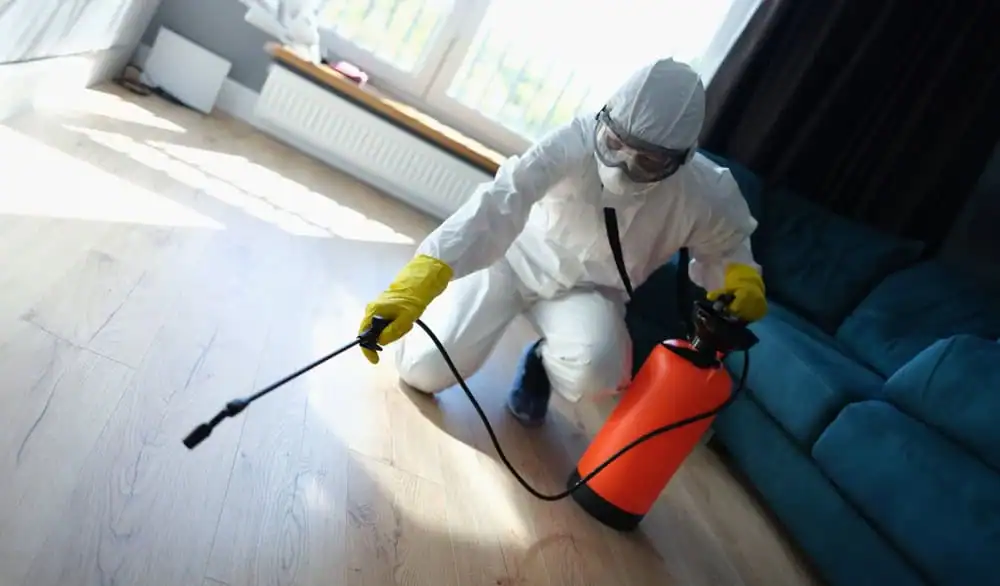
Liquid barrier treatment — sometimes called a soil treatment or termiticide barrier — is the most widely used method for subterranean termites, and for good reason. We apply a liquid termiticide to the soil around and beneath your home’s foundation, creating a continuous treated zone that termites cannot cross without being affected. When foraging termites contact the treated soil, they either die directly or carry the product back to the colony, spreading it through the population.
This method works quickly. For active infestations with visible damage or confirmed colony activity, liquid treatment is typically the fastest path to stopping the destruction. It’s also well-suited to older Morris County homes with crawl spaces, stone or block foundations, and wood-framing that sits close to grade — the exact construction profile that makes subterranean termites such a persistent problem in towns like Morristown, Rockaway, and Morris Plains.
The tradeoff is that liquid barriers don’t last forever. Depending on the product and soil conditions, reapplication is typically needed every five to ten years. Some homes also present challenges — properties with in-ground wells, sub-slab heating ducts, or certain drainage features require careful planning to ensure the treatment is applied correctly and safely. That’s not a reason to avoid liquid treatment; it’s a reason to work with someone who knows what they’re doing.
Professional-grade termiticides like Termidor are not available to the general public, and their application in New Jersey requires a licensed pesticide applicator certified under NJDEP Category 7B — Termites and Wood Destroying Insects. This isn’t a technicality. It’s a meaningful distinction between a treatment that works and one that doesn’t.
Termite Bait Stations vs. Liquid Treatment: Which One Is Right for Your Home?
Bait station systems take a different approach. Instead of creating a chemical barrier in the soil, we install bait stations at intervals around the perimeter of your home, where termites forage naturally. The stations contain a slow-acting agent that foraging termites carry back to the colony, eventually reaching and eliminating the queen. It’s a slower process than liquid treatment, but it targets the source rather than just the entry points.
Bait systems are particularly well-suited to properties where a full liquid barrier isn’t practical — homes near ponds, wells, or sensitive landscaping, for example. They’re also a strong choice for long-term monitoring. Because the stations remain in place after the initial treatment, they allow for ongoing detection of termite activity, which means a future infestation can be caught early rather than discovered after significant damage has occurred.
We use the Sentricon system, one of the most recognized bait platforms in the industry. If we recommend bait stations, our program includes ongoing monitoring visits — that’s what separates a bait program from a one-time installation.
One thing worth understanding: bait systems work on a timeline measured in months, not days. If you have an active infestation causing visible structural damage, liquid treatment is generally the faster and more appropriate first response. In some cases, a combination approach — liquid for immediate control, bait for long-term monitoring — makes the most sense. A thorough inspection is what determines that, not a phone quote.
For Morris County homeowners with wooded lots, properties adjacent to natural areas like Lewis Morris County Park, or homes with mature landscaping and mulch beds close to the foundation, bait stations offer a practical and minimally invasive option that works with the environment rather than against it.
Termite Treatment Cost in Morris County, NJ
Cost is usually the first question, and it’s a fair one. Termite treatment isn’t cheap, but it’s significantly less expensive than the alternative. The average homeowner who delays treatment and allows termite damage to progress spends around $3,000 on structural repairs alone — and that’s separate from the cost of treatment itself. Most standard homeowners insurance policies don’t cover termite damage, which puts the full financial burden on the homeowner.
In Morris County, termite treatment typically ranges from $500 to $3,500 depending on the method, the size of the property, and the severity of the infestation. Understanding what drives that range helps you budget realistically and evaluate quotes fairly.
Termite Treatment Cost Per Square Foot: What You're Actually Paying For
Liquid barrier treatments are generally priced by linear foot — the perimeter of the structure being treated — rather than square footage. Industry pricing typically runs $3 to $20 per linear foot, depending on the product used, soil conditions, and the complexity of the application. For a home with 150 linear feet of foundation, that puts the range somewhere between $1,350 and $2,500 for chemical treatment. A larger home at 200 linear feet might run $1,700 to $3,200.
Heat treatment is priced differently — typically $1 to $3 per square foot of treated space, which works out to roughly $2,000 to $6,000 for a 2,000 square foot home. Heat is most effective for drywood termites, which are far less common in Morris County than Eastern Subterranean Termites. For most homeowners dealing with a subterranean infestation, heat treatment alone isn’t the standard recommendation — and a company that leads with it for a subterranean problem is worth questioning.
Bait station systems involve an upfront installation cost plus ongoing monitoring fees. The monitoring component is not optional — it’s what makes the system work over time. When comparing quotes, make sure you understand whether the price includes follow-up visits or whether those are billed separately.
What actually drives cost variation: the size of your home’s foundation perimeter, the construction type (slab, crawl space, or basement), the severity and extent of the infestation, site-specific challenges like wells or drainage features, and the treatment method selected. A quote that doesn’t account for these factors isn’t a real quote — it’s a placeholder.
Why Professional Termite Treatment Works Better Than DIY
Hardware store termite products are real, and the temptation to try them first is understandable. But there’s a significant gap between what’s available over the counter and what we can legally apply and how we apply it.
Consumer-grade termiticides are formulated at lower concentrations than professional products and cannot be applied at the volume or depth needed to create a complete soil barrier around a foundation. A partial barrier doesn’t stop termites — it redirects them. In some cases, incomplete treatment scatters a colony without eliminating it, making the problem harder to address later.
The other issue is detection. Knowing where to treat requires knowing where the colony is active, where the entry points are, and what conducive conditions exist around the structure. That assessment takes training and experience. Applying foam or granules around visible damage treats the symptom, not the source.
In New Jersey, the application of commercial-grade termiticides is regulated by the NJDEP and requires a Category 7B certification — a credential that involves formal training, an examination, and ongoing compliance. When you hire us, you’re hiring someone who has demonstrated they know how to apply these products safely and effectively.
There’s also the matter of what happens when treatment doesn’t work. We back every job with a 100% satisfaction guarantee and will retreat at no additional cost if needed. A DIY attempt that fails leaves you starting over — with more time lost and more damage done. For older Morris County homes with the kind of construction that makes subterranean termites a real and persistent threat, getting it right the first time is worth the investment.
Choosing the Right Termite Treatment for Your Morris County Home
The honest answer is that the best termite treatment is the one that matches your home’s specific situation — its construction, the species involved, the extent of activity, and any site features that affect how treatment can be applied. That determination requires an actual inspection, not a phone estimate.
What you can take away from this: liquid barriers work fast and are well-suited to the subterranean termite activity common across Morris County. Bait systems offer long-term monitoring and are a strong fit for sensitive properties or ongoing prevention. Heat treatment has its place, but it’s not the default answer for the Eastern Subterranean Termites that dominate this region.
If you’re seeing signs of termite activity — or you just want to know what you’re dealing with before it becomes a bigger problem — reach out to us at Prestige Pest Unit & House Wash. Same-day appointments are available for calls made before noon, and every job is backed by a 100% satisfaction guarantee.